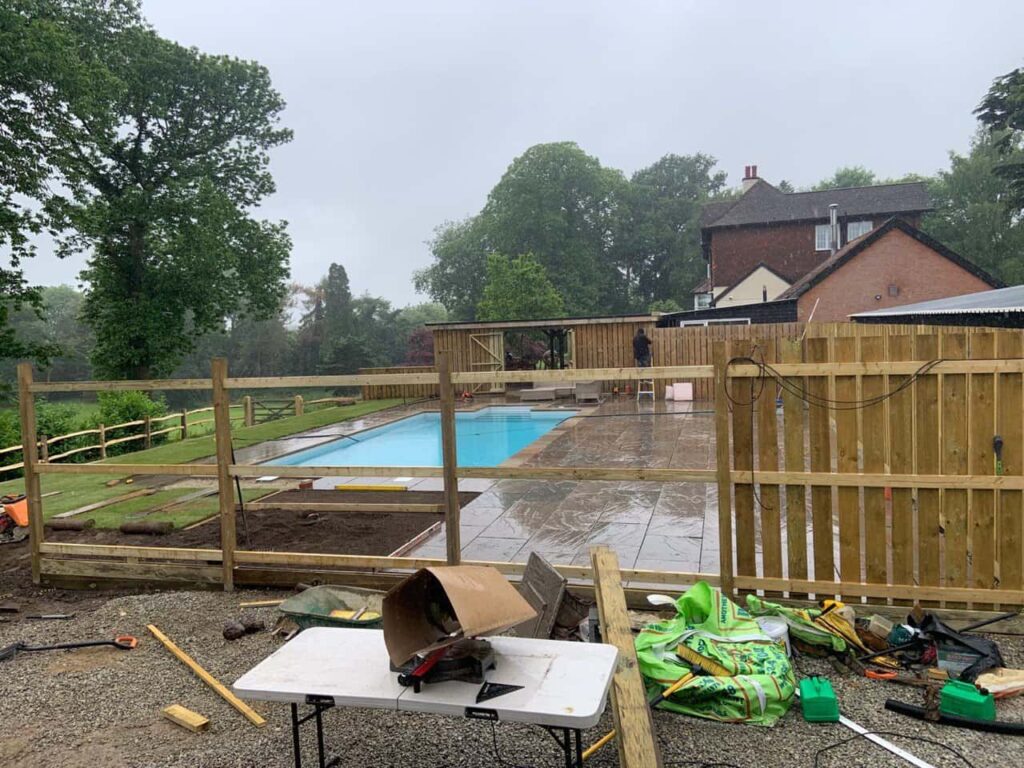
How Do You Choose the Right Type of Fencing for Your Property?
Choosing new fencing is not simply a matter of selecting the style that looks best. The right fence should suit the purpose of the boundary, the layout of the property, the level of privacy required and the amount of exposure the fence is likely to receive.
A rear garden that needs privacy may require a very different solution from a front boundary where appearance and openness are more important. Likewise, a long boundary exposed to strong weather may need a different construction approach from a short sheltered section between two garden areas.
For property owners in Doddington, Cambridge, the most practical way to choose fencing is to consider how the complete system will perform. Posts, panels or boards, fixings, ground conditions, gates and the surrounding layout all influence the finished result. Good fencing should be selected for the property rather than chosen from appearance alone.
What Should You Consider Before Choosing a Fence?
The first step is to decide what you actually need the fence to do.
Different types of fencing can provide privacy, separation, security, visual definition or protection for particular parts of a property.
Once the main purpose is clear, the most suitable style and construction become easier to identify.
Decide Whether Privacy Is the Main Priority
Privacy is one of the most common reasons homeowners replace or install fencing.
Where neighbouring gardens or frequently used outdoor areas are close together, solid fencing can provide a stronger visual barrier.
Panel fencing and feather edge fencing are often considered where privacy is important because they create a more enclosed boundary than open styles.
The required level of privacy should be balanced with appearance and the amount of light you want to retain around the garden.
Consider How Open You Want the Boundary to Feel
Not every property benefits from a completely solid fence.
Some front gardens or landscaped areas can look better with a more open boundary.
Picket fencing, post and rail fencing and other less enclosed styles can provide definition without making the area feel heavily screened.
This can be useful where the objective is to mark a boundary rather than create complete privacy.
Think About Security
Where the fence is intended to make access more controlled, height, construction and gate integration become more important.
A weak panel supported by inadequate posts will not provide a reliable boundary simply because it is tall.
Security depends on the complete installation.
Strong posts, appropriate fixings and a well-constructed gate can be just as important as the fencing material itself.
The Location of the Fence Matters
Different parts of a property can require different fencing.
A front boundary may need to complement the appearance of the property and remain relatively open.
A rear garden may require more privacy.
A side access route may need a stronger enclosed fence with a secure gate.
There is no reason to assume the same fencing style is ideal for every boundary.
Garden Size Can Influence the Best Style
The visual effect of fencing changes according to the size and shape of the garden.
Tall, solid fencing can provide excellent privacy, but in a small enclosed area it can also create a stronger sense of enclosure.
Lighter or more open designs may suit other settings.
Professional advice can help balance practical requirements with the proportions of the property.
Long Boundaries Need Careful Planning
A long fence line places more importance on consistency and support.
Small alignment errors can become increasingly noticeable across a long distance.
Post spacing, levels and ground conditions need to be considered carefully.
A well-planned installation creates a straighter and more consistent finish while ensuring the fence is properly supported throughout its length.
Ground Conditions Affect Fence Stability
Fence posts depend on the ground around them for support.
Soft, disturbed or inconsistent ground can affect stability if it is not considered during installation.
Different sections of the same boundary can also contain different ground conditions.
Professional installation should respond to what is found on site rather than assuming every post can be installed identically.
Sloping Ground Needs a Suitable Fencing Approach
Properties are not always perfectly level.
Where the ground rises or falls, the fence needs to follow the boundary in a controlled way.
Depending on the fencing style and site, this may involve stepping sections or adjusting the installation to suit the slope.
Ignoring changes in level can lead to awkward gaps or inconsistent panel positions.
Exposure to Wind Should Influence the Choice
A highly exposed boundary can place greater pressure on solid fencing than a sheltered garden.
The fence acts as a barrier to the wind, and the loads are transferred through the panels or boards to the posts.
This makes post strength, spacing and installation particularly important.
Where exposure is a concern, the fencing type and support system should be selected together.
Strong Posts Are Essential
Posts are one of the most important parts of any fence.
They support the visible fencing and transfer loads into the ground.
A high-quality panel cannot perform properly if the posts are weak, poorly positioned or unstable.
For this reason, choosing fencing should include consideration of the support system rather than focusing only on the panels or boards.
Post Spacing Affects Performance
Posts need to be positioned at appropriate intervals for the fencing system.
If they are too widely spaced, the panels or boards may not receive sufficient support.
Accurate spacing also helps create a consistent appearance.
This is particularly important on long boundaries where small variations can become visually obvious.
Fence Panels Offer a Straightforward Boundary Solution
Traditional fence panels are popular because they can create a clear, uniform boundary.
They are available in different designs and can suit many residential gardens.
Panels can provide privacy and visual consistency when installed between properly positioned posts.
The strength and appearance of the complete fence still depend on the quality of the posts, fixings and installation.
Feather Edge Fencing Can Suit Long Boundaries
Feather edge fencing is constructed using individual vertical boards rather than complete prefabricated panels.
This can create a strong and continuous boundary.
It is particularly useful where the fence needs to follow the exact length or shape of a site.
Because the fencing is constructed along the boundary, careful setting out and support remain important.
Feather Edge Fencing Provides Good Privacy
The overlapping boards used in feather edge construction create a relatively solid barrier.
This makes the style suitable where privacy is an important consideration.
The final appearance can also be adapted to the dimensions of the property.
As with any solid fencing, the supporting posts and framework need to be appropriate for the exposure and length of the boundary.
Picket Fencing Works Well Where Openness Matters
Picket fencing is often suitable for areas where the main objective is definition rather than complete screening.
The gaps between the boards allow the property to remain visually open.
This can make picket fencing particularly suitable for front gardens or decorative internal boundaries.
The proportions of the fence should complement the surrounding property.
Post and Rail Fencing Creates a More Open Boundary
Post and rail fencing provides clear separation without creating a solid visual barrier.
It can work well where an open appearance is preferred.
The simplicity of the construction also makes alignment and post positioning particularly important.
Because the rails remain visible across long distances, inconsistencies can affect the finished appearance.
Stock Fencing Serves a Different Purpose
Stock fencing is primarily functional and is generally used where the boundary needs to contain or separate animals or define larger areas.
Its construction differs from decorative garden panel fencing.
Posts, strainers and mesh tension all need to work together.
The system should be installed as a complete structure rather than simply attaching mesh between isolated posts.
Strainers Matter in Stock Fencing
Tensioned fencing places particular loads on terminal and corner posts.
These strainers help keep the mesh correctly supported.
If they are inadequate or begin moving, the fencing can lose tension and start sagging.
This demonstrates why the supporting structure is just as important as the visible wire.
Acoustic Fencing Has a More Specific Purpose
Acoustic fencing is considered where reducing the transmission of external noise is an important objective.
Its effectiveness depends on its construction and continuity.
Gaps can reduce the performance of the barrier, so careful installation is essential.
Where this type of fencing is being considered, it should be selected for the particular property and surrounding conditions rather than treated as ordinary decorative fencing.
Bespoke Fencing Can Solve Unusual Layout Problems
Standard panels are not always the best solution for every property.
Irregular boundaries, changes in level or unusual dimensions can sometimes benefit from bespoke fencing.
A tailored approach can help the fence fit the available space more accurately.
This is particularly useful where standard panel widths would create awkward small sections or poor transitions.
Gates Should Be Planned With the Fence
A gate should not be treated as an afterthought.
It forms part of the boundary system and needs appropriate support.
The width, location and expected use of the gate all influence the installation.
Heavy or frequently used gates place additional demands on supporting posts, which should be considered from the beginning.
Driveway Gates Need Strong Support
Driveway gates are larger and often heavier than ordinary pedestrian gates.
Their posts therefore need to provide appropriate support.
Alignment is also important so that the gates open and close correctly.
A well-planned driveway entrance should integrate the gate with the surrounding fencing rather than treating the two elements independently.
Pedestrian Gates Need to Be Practical for Daily Use
A garden or side gate may be used several times each day.
It needs to open smoothly, remain properly aligned and fit the surrounding fence securely.
The location should also make sense for the route through the property.
Good gate installation combines structural support with practical day-to-day use.
Existing Fence Problems Can Help Identify the Right Replacement
An old fence can provide useful information about what the replacement needs to improve.
Repeatedly leaning posts may indicate inadequate support.
Panels that continually become damaged may suggest exposure or unsuitable construction.
Sagging sections can indicate wider structural problems.
Understanding why the old fence failed can help avoid repeating the same issues.
Do Not Replace Panels Without Checking the Posts
Where panels have deteriorated, it can be tempting to replace them while keeping the existing posts.
This may be appropriate if the posts remain stable and suitable.
However, installing new panels between weak or leaning posts can limit the value of the work.
The whole fence line should be assessed before deciding what can reasonably be retained.
Leaning Fencing Usually Indicates a Support Problem
A fence can lean because of movement in the posts, ground or supporting structure.
Simply pushing the fence upright is unlikely to provide a lasting solution if the cause remains.
The affected posts and surrounding sections should be inspected.
A localised repair may be sufficient where only one area has failed.
Several Leaning Sections Suggest a Broader Problem
If one post moves, the repair may remain relatively small.
Where a long section of fence is leaning, several components may be involved.
The condition of multiple posts, fixings and panels should be considered together.
This helps determine whether repair remains sensible or whether a larger replacement section would provide a better result.
Broken Panels Do Not Always Mean the Entire Fence Needs Replacing
Localised damage can often be repaired.
If one panel has broken but the surrounding posts and neighbouring sections remain sound, replacing the damaged part may be sufficient.
The important step is checking why the panel failed.
If the cause involves repeated movement or weak support, those issues should be addressed at the same time.
Repeated Repairs Can Indicate the Fence Is No Longer Performing Well
Occasional fencing repairs are normal.
The situation becomes different when new failures keep developing along the same boundary.
Repeated post movement, broken panels and loose fixings can indicate that the system is deteriorating more generally.
At that point, a broader assessment can help determine whether continued localised repairs remain practical.
Rot Should Be Assessed in Context
Timber fencing can deteriorate over time.
The significance depends on which components are affected and how extensive the deterioration has become.
A damaged board can be very different from widespread deterioration affecting several posts.
Repair decisions should therefore consider the structure of the fence rather than simply the presence of one deteriorated area.
The Base of Timber Posts Deserves Particular Attention
The lower section of a fence post is important because it supports the entire section above.
Movement or deterioration here can affect the alignment of the fence.
A panel may appear to be the problem when the actual issue is the post supporting it.
Professional assessment helps distinguish between visible damage and the structural cause.
Fence Height Should Reflect the Purpose
A taller fence can provide greater screening, but height should not be selected independently of the rest of the design.
The proportions of the garden, exposure and support system all matter.
Where privacy is the objective, the aim should be to achieve an effective boundary without making the installation unnecessarily heavy or unsuitable for the space.
Very Tall Solid Fencing Needs Appropriate Support
As fence height increases, more surface area is exposed to the wind.
This places greater loads on the posts.
A tall privacy fence therefore requires proper structural planning.
Using larger panels without considering the supporting system can create future stability problems.
Appearance Should Complement the Property
Fencing forms a large visual part of many gardens.
The style should therefore work with the surrounding property.
A traditional panel may suit one setting, while a simpler or more open design may look more appropriate elsewhere.
The goal should be a boundary that looks intentional rather than one chosen without considering the wider space.
Consistency Across the Boundary Matters
Mixing different panel heights, post styles or construction methods can sometimes create a patchwork appearance.
Where possible, a consistent approach helps the boundary look more organised.
This does not mean every section must be identical.
Different functions can justify different fencing, but transitions should be planned carefully.
Internal Garden Fencing Can Be Different From Perimeter Fencing
Some properties use fencing to separate different parts of the garden.
These internal boundaries may not require the same privacy or security as the perimeter.
Lighter fencing can sometimes work well for defining patios, planting areas or other spaces.
Choosing according to purpose avoids unnecessarily heavy construction.
Front Garden Fencing Often Has Different Priorities
Front boundaries contribute strongly to the appearance of the property.
Complete privacy may not be the main objective.
An open fence can provide definition while maintaining visibility and a less enclosed feel.
The best choice depends on how the front garden is used and the overall appearance required.
Rear Garden Fencing Often Prioritises Privacy
Rear gardens are usually more private spaces.
Solid panels or feather edge fencing can therefore be more appropriate where screening is desired.
The height and construction should still suit the garden proportions and exposure.
Good installation helps the fence remain straight and consistent rather than relying solely on the visual style.
Side Boundaries Need to Balance Privacy and Access
A side boundary can contain narrow access routes, gates and changes in level.
The fencing should accommodate these features without making the route difficult to use.
Where a gate is included, sufficient post support and clearance are essential.
Careful planning can help the fence and access route work together.
Fencing Around Patios Should Be Considered Carefully
A patio is often one of the most frequently used parts of a garden.
Fencing around it can strongly influence privacy and the sense of enclosure.
A tall solid boundary may be beneficial where screening is required.
In another garden, a more open style may make the patio feel more spacious.
The best approach depends on the relationship between the seating area and the surrounding boundary.
Fencing Can Help Define Different Garden Areas
A fence does not always have to sit at the outer edge of a property.
It can also help separate functional areas.
For example, fencing can create a clearer distinction between a main garden and a service area.
Where internal fencing is used, the design can often be lighter because full perimeter security may not be required.
Think About Future Maintenance
Different fencing types require different levels of ongoing attention.
When choosing a style, it is useful to consider how accessible the fence will be and how easy individual components are to inspect or repair.
A fence that suits the property should remain practical after installation, not just look good on the first day.
Easy Access Can Make Future Repairs Simpler
Dense planting or structures positioned directly against the fence can make later inspection more difficult.
Where possible, the boundary should be planned with some thought for future access.
This can make it easier to identify loose fixings, movement or deterioration before a small problem becomes more extensive.
Vegetation Can Affect Fencing
Shrubs, climbing plants and tree branches can place pressure on fences.
Growth can push panels, retain moisture or obscure developing damage.
This does not mean vegetation should be avoided entirely.
It simply means the relationship between planting and the fence should be considered when choosing and maintaining the boundary.
Tree Roots and Ground Movement Can Influence Fence Lines
Ground conditions around established planting can change.
Where large roots or uneven ground affect the boundary, standard installation may need adjustment.
Professional assessment can identify whether the fence line requires a different approach.
Forcing posts into unsuitable positions can create alignment and stability problems.
A Fence Should Be Designed as a Complete System
One of the most important points when choosing fencing is that the visible panel is only one component.
A complete fence includes:
- Posts
- Panels, boards or rails
- Fixings
- Gravel boards where appropriate
- Gates
- Strainers for tensioned fencing
- Ground support
- End and corner details
The performance of the fence depends on these components working together.
Gravel Boards Can Protect the Lower Edge of Some Fencing
Where suitable for the chosen fencing system, gravel boards can separate timber panels or boards from direct contact with the ground.
They also provide a defined lower edge.
Their inclusion should form part of the overall fence design rather than being added without considering levels and panel dimensions.
Corner Posts Need Particular Attention
Corners change the direction of the fence and can experience loads from more than one side.
The post needs to support adjoining sections while maintaining correct alignment.
This is particularly important for long or exposed fence lines.
Careful corner construction helps the complete boundary remain stable.
End Posts Also Need Adequate Support
The end of a fence line is another important structural point.
Where the fencing terminates at a gate, wall or open boundary, the final post needs to remain properly supported.
A weak end can allow nearby sections to move.
Professional installation considers how every fence run starts and finishes.
Straight Lines Require Accurate Setting Out
A fence can be structurally sound yet still look poor if the posts are not correctly aligned.
Setting out the boundary before installation helps maintain consistent positioning.
This becomes especially important over longer distances.
Accurate lines and levels contribute significantly to the finished appearance.
Small Errors Become More Noticeable on Long Fence Runs
A slight variation between two posts may be difficult to notice.
Repeated across many sections, however, small inconsistencies can create a visibly uneven fence.
Professional installation helps control spacing and alignment throughout the boundary.
This is one reason long fences benefit from careful preparation rather than being installed section by section without an overall plan.
Do Not Choose Fencing Based Only on a Photograph
A particular style may look attractive in another garden but perform differently on your property.
Ground conditions, exposure, boundary length and privacy requirements can all change the suitability.
The same fence can look and function very differently depending on where it is installed.
Site-specific assessment therefore provides more value than choosing from appearance alone.
The Cheapest-Looking Solution Is Not Necessarily the Simplest
A basic fence can still require good preparation and installation.
Using a straightforward panel does not remove the need for stable posts, accurate alignment and suitable fixings.
The complexity of a fencing project depends on the site as much as the chosen style.
Good workmanship remains important regardless of how simple the visible design appears.
What Are the Main Types of Fencing to Consider?
Common options can include:
- Traditional fence panels
- Feather edge fencing
- Picket fencing
- Post and rail fencing
- Stock fencing
- Acoustic fencing
- Bespoke fencing
- Fencing with pedestrian gates
- Fencing with driveway gates
Each type serves a different purpose.
The best choice depends on the level of privacy, openness, strength and visual appearance required.
Which Fencing Is Best for Privacy?
Where privacy is the main priority, solid fencing is generally more suitable than open styles.
Panel fencing and feather edge fencing can both provide strong screening.
The exact choice should reflect the length of the boundary, ground conditions and desired appearance.
Post strength becomes particularly important because solid fencing receives greater wind loading.
Which Fencing Is Best for an Open Appearance?
Where visual openness is preferred, picket or post and rail fencing may be more suitable.
These styles mark the boundary without creating a complete screen.
They can work particularly well where the main purpose is definition rather than privacy.
The proportions should still be selected to suit the property.
Which Fencing Is Best for Irregular Boundaries?
Bespoke or constructed-on-site fencing can often adapt more easily to unusual lengths, slopes or changes in direction.
Standard panels may still be suitable in some areas.
The important point is to plan how each section will fit together before installation begins.
Awkward leftover gaps should not be treated as an afterthought.
Which Fencing Is Best for a Long Garden Boundary?
Long boundaries benefit from fencing that can be installed consistently and supported correctly throughout.
Feather edge fencing and panel systems can both be suitable depending on the site.
Ground conditions, exposure and the desired level of privacy should influence the final choice.
The quality of setting out and post installation is especially important.
Which Fencing Is Best Around a Front Garden?
Where privacy is not the main concern, a more open style such as picket fencing can provide clear boundary definition without creating an overly enclosed appearance.
Other designs may also be suitable depending on the property.
The priority should be achieving the right balance between function and appearance.
Why Professional Fencing Advice Adds Value
Professional fencing installation begins with understanding the property.
The boundary length, changes in ground level, existing posts, exposure, access requirements and intended use all influence the best approach.
This prevents the choice from being based solely on a panel style.
It also helps identify whether parts of an existing fence can remain or whether underlying problems need to be corrected before new fencing is installed.
Good Installation Matters as Much as Fence Type
Even the most suitable fencing material can perform poorly if it is installed incorrectly.
Unstable posts, inconsistent spacing, weak fixings and poor alignment can all shorten the useful life of the boundary.
Professional installation brings the different components together as one system.
This is particularly important where the fence includes changes in level, corners or gates.
Fencing Installation in Doddington, Cambridge
At Fast Fix Fencing Doddington, we approach fencing by considering how the boundary needs to function as well as how it should look.
Privacy requirements, ground conditions, exposure, fence length, access and gate requirements can all influence the most suitable design. We can also assess existing fencing to determine whether localised repairs are appropriate or whether a replacement section would provide a better result.
For property owners in Doddington, Cambridge, this assessment-led approach helps ensure that the chosen fencing suits the property and is supported by an installation designed around the actual site conditions.
Conclusion
Choosing the right type of fencing begins with understanding what the boundary needs to achieve. Privacy, security, openness, appearance, ground conditions, exposure and access should all influence the decision.
Panel fencing and feather edge fencing can provide strong privacy, while picket and post and rail fencing can create a more open boundary. Stock fencing, acoustic fencing and bespoke designs serve more specific requirements. Whatever style is selected, posts, fixings, levels and gate support remain essential to the performance of the complete fence.
If you are considering new fencing or replacing an existing boundary at your property in Doddington, Cambridge, contact Fast Fix Fencing Doddington. We can assess the site and recommend a fencing approach based on the layout, ground conditions and way you want the boundary to function.
Call us on: 01668 268 793
Click here to find out more about Fast Fix Fencing Doddington
Click here to complete our contact form and see how we can help with your fencing needs.